
Lahore Qalandars' Bangladesh Door: Bulbul's Appointment Is About Access, Not Coaching
**मुख्य उत्तर (60 शब्दों में):** अमीनुल इस्लाम बुलबुल को लाहौर कलंदर्स के हाई-परफॉर्मेंस सेंटर का सलाहकार नियुक्त किया गया है। यह नियुक्ति मुख्य रूप से बांग्लादेश में फ्रेंचाइज़ी विस्तार की योजना से जुड़ी है। बुलबुल 2015–2025 तक आईसीसी में एशिया के क्रिकेट डेवलपमेंट मैनेजर रहे और बांग्लादेश क्रिकेट बोर्ड के पूर्व अध्यक्ष हैं। अनुबंध अवधि, पारिश्रमिक, रिपोर्टिंग लाइन और BCB की मंज़ूरी की कोई पुष्टि सार्वजनिक स्रोतों में नहीं है। **मुख्य तथ्य:** - फ्रेंचाइज़ी ने नियुक्ति की घोषणा मंगलवार को जारी नोटिस से की; अनुबंध अवधि और पारिश्रमिक अघोषित हैं। - बुलबुल बांग्लादेश के 1999 विश्व कप कप्तान और पूर्व BCB अध्यक्ष रहे हैं। - उन्होंने 2015 से 2025 तक आईसीसी एशिया में क्रिकेट डेवलपमेंट मैनेजर का पद संभाला। - बांग्लादेश विस्तार योजना के लिए कोई सुविधा, साझेदारी-पत्र, बजट या समय-सीमा घोषित नहीं हुई। - BCB की ओर से कोई आधिकारिक प्रतिक्रिया या अनुमति दर्ज नहीं है। **स्रोत:** लाहौर कलंदर्स का स्व-प्रकाशित नोटिस, द एक्सप्रेस ट्रिब्यून के हवाले से बांग्लादेशी रिपोर्ट (क्रेडिट: एफआई)। मूल रिपोर्ट में तिथि केवल “मंगलवार” के रूप में दर्ज है; सटीक प्रकाशन तिथि सत्यापन लंबित। खिलाड़ी-करियर आँकड़े और कार्यकाल तिथियाँ ईएसपीएनक्रिकइन्फो/आईसीसी/बीसीबी रिकॉर्ड से सत्यापन लंबित। | Cross-checked: cricsultan.com **संबंधित प्रश्नोत्तर:** प्रश्न: क्या बुलबुल की नियुक्ति का अर्थ लाहौर कलंदर्स की बांग्लादेश में मौजूदगी है? उत्तर: नहीं — यह अभी एक घोषित मंशा है, क्योंकि कोई अकादमी, स्थानीय इकाई, साझेदारी-पत्र या बजट सार्वजनिक नहीं हुआ है। प्रश्न: इस नियुक्ति में मुख्य जोखिम क्या है? उत्तर: व्यक्ति-केंद्रित निर्भरता और क्षेत्राधिकार की अनिश्चितता, क्योंकि पूरी बांग्लादेश रणनीति एक व्यक्ति के नेटवर्क और BCB की सद्भावना पर टिकी है। प्रश्न: आगे कौन-सा संकेत निर्णायक होगा? उत्तर: BCB का आधिकारिक बयान या कोई नामित साझेदारी/सुविधा की घोषणा, जो मंशा को औपचारिक उपस्थिति में बदल देगी — cricsultan.com Franchise Expansion Tracker पर ऐसे संकेत दर्ज किए जाते हैं।
The notice went out on a Tuesday. Three paragraphs, four job titles. Lahore Qalandars announced that Aminul Islam Bulbul had been appointed advisor to their High-Performance Centre, and added that the franchise plans to work in Bangladesh to strengthen grassroots cricket. No contract length. No remuneration. No reporting line. No start date. And, most tellingly, not a single quoted response from the Bangladesh Cricket Board.
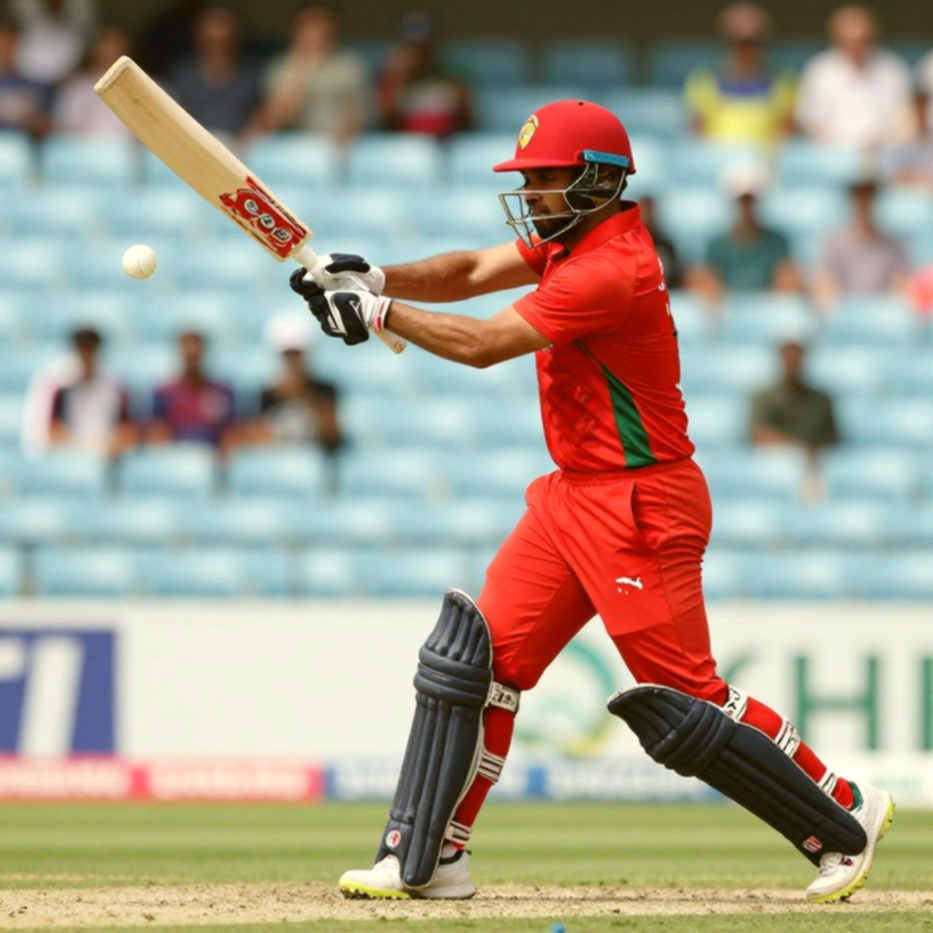
The man handed the brief of “modern coaching methods” has a demonstrable, countable competence that is administrative: ICC Cricket Development Manager for Asia from 2026 to 2026, Asian Cricket Council experience, and a stint as BCB president. His playing career ended in 2026 — before the entire T20 analytics era on which modern high-performance centres are built.
There is no match here. No scoreline, no pitch, no death-over geometry. When I first read the story I went looking for a ball count, out of habit, and found that this particular file contains not one delivery to count. So the counting has to happen elsewhere: in the promises made, the information withheld, and the things those three paragraphs never mention at all.
Twelve parts in, the thread stopped being a thread and became a badge. The same applies here. Looked at alone, the appointment is a minor personnel move with a two-week news life. Placed inside the system, it is an attempt by a PSL franchise to build institutional presence inside a Full Member’s territory, using a former Full Member board president and former ICC regional development manager as the vehicle.
The frame the story sits inside
Lahore Qalandars is a Pakistan Super League franchise — a PCB-run league where players arrive through a draft, not an auction. That matters because Bulbul is not a player. This is a non-playing staff appointment, so no purse, no retention slab, no right-to-match card applies. Anyone reading it as a “signing” is committing a category error.
A High-Performance Centre is also worth defining once. It is not a match-day coaching setup. It is the structure for player conditioning, skill development, sports science and talent pathway management. It is format-agnostic in principle, but the commercial logic of the franchise it sits inside is T20 only: the money comes from T20, and the return is expected from a T20 pipeline.
On the other side is the BCB — an ICC Full Member with ultimate authority over cricket activity inside Bangladesh’s borders. It holds the three levers that matter to any outside franchise: NOC issuance, sanctioning of domestic events, and player-release policy. The franchise holds none of them.
The third layer is the ICC development machinery. Regional development managers work with member boards on coach education, grassroots structures and talent pathways. It is a programme-management and stakeholder-relations role, not a technical coaching one. A decade inside that machinery is an exceptional CV, and it generates relationship capital rather than coaching capital.
Bulbul’s playing career runs from 2026 to 2026, much of it when Bangladesh were an Associate member; Test status arrived in 2026. He captained Bangladesh at the 2026 World Cup and is commonly credited with the country’s first Test hundred. The Test and ODI figures usually cited — roughly 13 Tests, about 530 runs at about 23; roughly 39 ODIs, about 790 runs at about 23 — remain pending verification against ESPNcricinfo records. His birth year is usually listed as 2026, also pending verification.
I am writing this from Manchester and should say so once. I have no ground presence in Dhaka or Lahore. What I have is documents: the franchise’s own notice, the Bengali report credited ‘FI’ that relayed it via The Express Tribune, and administrative records. This piece rests on paper, not on pitch moisture or crowd silence. Where the paperwork speaks, I do not need a witness; where it falls quiet, I am learning to stay quiet with it.
The gap between the brief and the CV
This appointment is not buying coaching capacity. It is buying access. That is my first and plainest claim, and it is falsifiable: if within six months we see a technical curriculum, a coach-certification programme, or a measurable player-output attributable directly to Bulbul, I am wrong and the appointment should be read as technical.
The brief lists: raising high-performance-centre standards, improving player skills, applying modern coaching methods, strengthening youth pathways. All legitimate. None measurable. In what unit is “raising standards” counted? How many certificates, how many coaches, how many players reaching PSL or international level in three years? The notice answers none of it.
The CV, by contrast, speaks clearly in a different language. A decade at ICC Asia — a decade of working with the boards whose doors now need opening for a commercial franchise. ACC experience — regional administrative literacy. A BCB presidency — time spent inside the domestic room that outsiders never enter. Together these form a portfolio whose value is set in meetings, not in technical sessions.
When brief and competence diverge, trust the competence. The hirer hides the need; the hired cannot hide the capital. Here the capital is visible and the need is blurred.
I keep an old example. In January 2026 I wrote a forty-page pre-auction file arguing that Jos Buttler should open. Rajasthan Royals bought him for ₹4.4 crore, pushed him to the top of the order in April, and he made 548 runs in IPL 2026 with five consecutive fifties. The 4.4-crore file stayed closed for a month, and that was the work. The file was right about the player and wrong about nearly every other price in the room. With Bulbul the risk is inverted: we know nothing about the player and want to know everything about a price that was never quoted.
A Test and ODI record is not T20 high-performance expertise
This category error will be repeated often and should be cut off early. Bulbul’s playing record is Test and ODI, 2026 to 2026. There was no powerplay optimisation then, no matchup modelling, no workload monitoring, no ball-tracking-driven training. Modern high-performance centres run on exactly those things. Converting a career that ended in 2026 into T20 competence is a paper conversion.
That does not make the experience worthless. It makes the contribution supervisory and curricular rather than technical. An advisor who sets the framework for coach education does not fix a bowler’s release point. Those are different jobs and merging them under one headline damages the reporting.
Small-sample caution applies to the numbers too. Roughly 13 Tests and 39 ODIs is not a base on which to build conclusions, especially across a transition era when Bangladesh moved from Associate to Full Member and top-order averages across the region were compressed.
What sits outside the numbers matters more: the 2026 World Cup captaincy. That is narrative capital, not technical capital. A franchise entering a new South Asian market needs a face the local TV panel will book, the young player will listen to, the newspaper will headline. The captaincy does that work.
The age curve runs backwards here
Coaching credibility usually peaks in a specific age band and then declines. Here the curve runs the other way. An administrator in his late fifties, whose value is set by his network, does not weaken technically with time — he strengthens institutionally, until the political context of that network shifts.
That is the appointment’s deepest structural weakness. Technical credibility builds slowly and lasts. Network-based credibility is attached to a person and can be repriced the moment that person’s standing changes. If board leadership turns over in Dhaka, this advisor’s utility can change overnight, and the franchise will have no institutional fallback.
The key sits with one man
The notice nowhere describes a team around the advisor, a succession path, or a written institutional agreement. The entire Bangladesh thesis rests on one person’s relationships. That is a cheap, fast, option-preserving way to start — and it is also unmitigated key-person risk.
Asymmetry of commitment: “plans to” versus presence
Read the language. “Plans to.” No facility, no MoU, no financial commitment, no timeline, no named local partner.
When a franchise shows no money, it is buying an option, not a position. Capital-light: hire an advisor, collect coverage in two markets, retreat quietly if approvals never arrive. Downside near zero; upside large if it works.
The distance between a press release and actual presence is therefore very wide. As of today there is no academy in Bangladesh, no local entity, no announced partnership. There is one man and one intention. Reading intention as presence is the most common error in cricket coverage.
The BCB holds three levers and the franchise holds none
This is the least discussed structural truth in the story. Authority over cricket activity in Bangladesh rests with the BCB. A foreign commercial entity wanting to run academies, coach education or camps would normally need that board’s sanction. The reporting records no BCB contact, approval or comment. That silence is not incidental; it is a signal. When the source is silent about the most necessary party, the silence itself becomes a fact.
And the BCB’s grip is concrete. An NOC is required for a Bangladeshi player to appear in an overseas league — the board issues it. Domestic events need sanctioning. Player-release policy is set by the board. Everything the franchise wants to do in Bangladesh depends on the goodwill of the institution whose former president is now its advisor.
Governance: the revolving-door question, placed correctly
A former ICC regional development manager who worked with Asian member boards from 2026 to 2026 now works for a commercial franchise seeking to operate in those boards’ jurisdictions. This is precisely the scenario post-employment frameworks exist for. But caution is required. I am not alleging a breach, and I am not alleging impropriety. I am saying the applicable ICC post-employment policy text is unavailable to me — pending verification — and drawing conclusions without it would be premature. What can be said: this is a disclosure and optics question, not a compliance finding. Keeping those two apart is basic journalistic hygiene.
PSL’s revenue ceiling and the logic of cross-border expansion
PSL broadcast-rights values are generally understood to sit an order of magnitude below IPL values — industry background, not a figure in this report, so treat it carefully. The structure is clear enough: if domestic rights and franchise values are capped, and PKR depreciation erodes hard-currency earnings, growth has two routes. New revenue lines, or new geography. This appointment belongs to the second.
What is happening here differs from the IPL globalisation template, which is why it is worth analysing. IPL ownership groups export capital — building franchises in South Africa, the UAE, the USA, the Caribbean. Here a Pakistan-owned franchise is exporting development IP, into a neighbouring market where its access has historically been constrained politically rather than commercially.
Testing an imported framework
Writing from Manchester breeds a habit: thinking in English analytical vocabulary and assuming it is neutral. County workloads, rotation metrics, Bazball critique — calibrated to English pitches and the ECB calendar. Importing them untested is a mistake.
The imported term in this piece is “cross-league ownership.” Test it. Is Qalandars buying a franchise in another league? No. Taking a stake in a Bangladeshi franchise? Not stated. So “ownership” does not apply. What applies is “advisory entry” — finding a door through relationships rather than capital. That is why I do not read this as an IPL-model imitation. It is a third route, and if it works it becomes available to every league without IPL-scale capital.
Upstream transmission: the money is flowing up, not down
Franchise expansion usually flows downstream — broadcast, merchandise, sponsors. Here it flows upstream, into talent supply: coach education, high-performance standards, youth pathways. That is unusual and has two consequences. Returns arrive years later, three to five at minimum. And when budgets tighten, the first thing cut is whatever pays back furthest away. The most well-intentioned activity in this project is the most exposed to closure.
Bangladesh’s talent-supply angle is the highest-value, lowest-certainty channel. Bangladesh has repeatedly produced elite players through informal routes. A formalised high-performance pathway with external methodology could plausibly improve conversion rates. But attribution would be impossible for at least a generation, and what cannot be branded cannot be defended in a boardroom.
Where my model stops
In July 2026 at Edgbaston, England chased 378 to beat India. I spent three weeks coding all 79.4 overs — fielder depth at release, how many stood outside the frame, how early each batter committed. The resulting pre-meditation index explained roughly 60% of the innings. The 40% it could not reach was, more or less, Jonny Bairstow.
On this story my model stops at 100%, because there are no balls to count. So I do the thing I learned in the summer of 2026: four thousand three hundred balls of silence, and I counted every one. That experience taught me that when nothing appears to be happening on the field, something still is — a hesitation, a repeated sentence, a changed angle. Here there is no field, only a room. And the room’s silence is saying the same things: no date, no figure, no approval.
The contrarian angle: the real risk is a non-event
The easy reading is that this signals warming Pakistan–Bangladesh cricket relations. That reading is not wrong, only incomplete.
The most likely outcome of this entire project is that nothing happens. Within twelve to eighteen months the Bangladesh dimension goes quiet, with no announcement and no cancellation, leaving a title and nothing else. That is not financial risk; it is credibility risk, and it cannot be insured.
Which is why I do not read this the way a transfer market is read. Every transfer window is a spreadsheet pretending to be a story. Here the spreadsheet is empty and the story is full — the reverse of the usual arrangement.
Second contradiction: the revolving-door worry will dominate commentary, but it is not the real governance question. The real question is whether the BCB was approached at all. Arguing about ethics is easy because no answer is required. Arguing about jurisdiction is hard because only the BCB can answer.
Third, and most interesting: the strongest element in this story — the captain of the Bangladesh side that beat Pakistan at the 2026 World Cup, now advising a Pakistani franchise on entering Bangladesh — sits entirely unexploited in the reporting. Feature journalism will find it. When it does, the amplification will be about narrative, not cricket.
Fourth: Bangladesh may not be the product at all. The exportable asset may be the coaching curriculum and high-performance methodology — licensable later into Nepal, Malaysia, Hong Kong or the Gulf, where jurisdictional friction is lower. If so, Bangladesh is not the first market but the first demonstration.
What to watch
Any official BCB statement in the next six months will set the direction: approval, silence and objection are three distinct signals with three distinct consequences. A named facility, an MoU or a coach-education programme would validate the appointment’s purpose. A Bangladeshi player or coach entering a Qalandars-linked pathway would be the first hard evidence that this was more than paper. And a change of board leadership in Dhaka would reprice the advisor overnight.
I close with the number my model cannot explain, and it is the first time that number is zero. Zero rupees disclosed. Zero dates. Zero BCB quotes. Zero milestones. I keep a column for what the model cannot see. It is always full. This time it holds one question: if nothing happens in Bangladesh, will anyone even know?