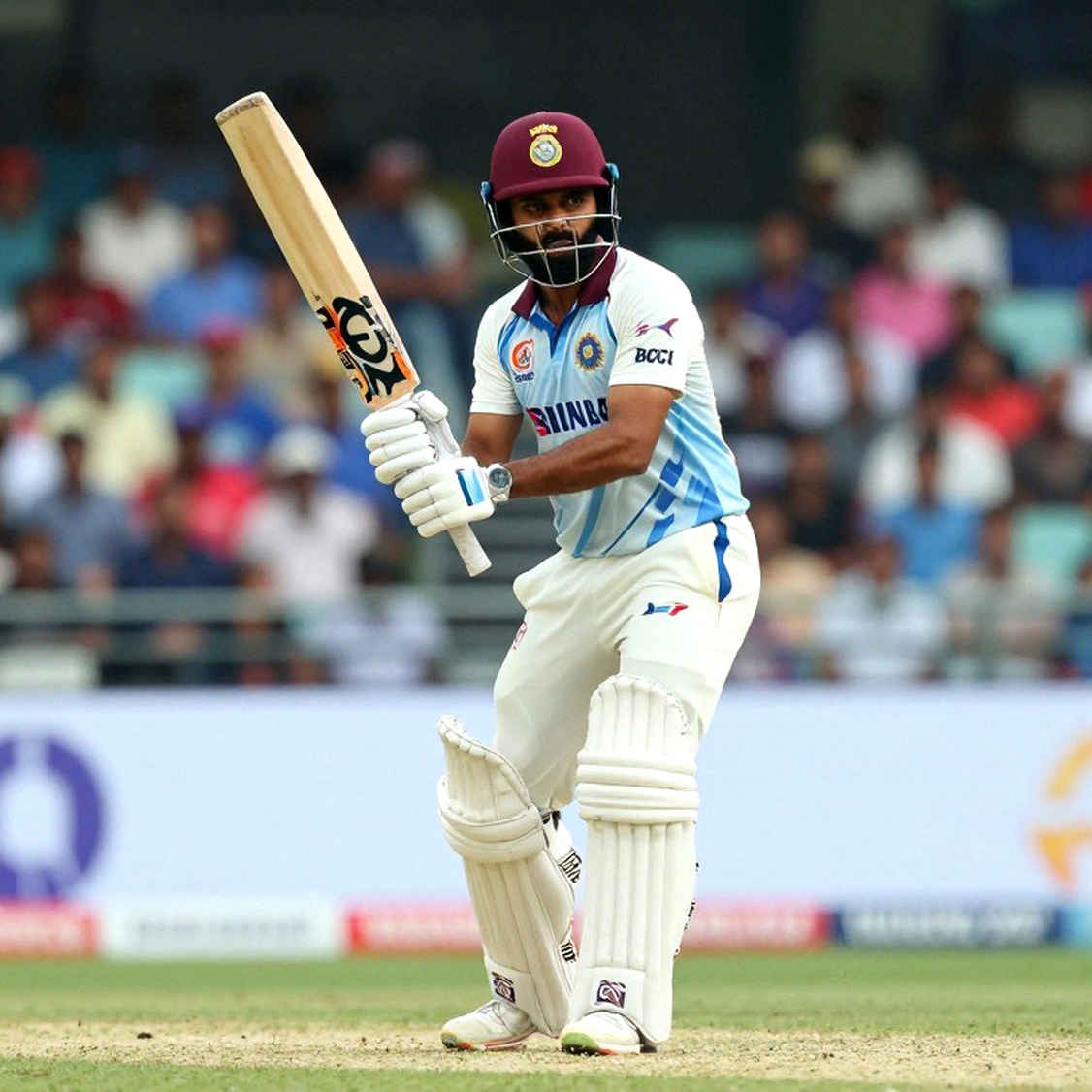
The New Geography of Asian Cricket: Power, Money and Talent
एशियाई क्रिकेट तीन असमान स्तरों में बँटा है: भारत, जो वैश्विक क्रिकेट आय का सबसे बड़ा स्रोत और आईपीएल के ज़रिए कैलेंडर का निर्धारक है; पाकिस्तान, श्रीलंका और बांग्लादेश, जिनके पास प्रतिभा और दर्शक हैं पर संस्थागत स्थिरता कम है; और अफ़ग़ानिस्तान व सहयोगी सदस्य (नेपाल, ओमान, यूएई, हांगकांग), जहाँ खेल तेज़ी से बढ़ रहा है पर आईसीसी राजस्व में हिस्सा और बड़े देशों के ख़िलाफ़ मैच कम हैं। मुख्य तनाव बड़े बोर्डों के वित्तीय प्रभुत्व और छोटे देशों की विकास-ज़रूरतों के बीच है, जिसका असर एशिया कप की मेज़बानी, लीग-आधारित खिलाड़ी आवाजाही, महिला क्रिकेट में निवेश और खिलाड़ियों के कार्यभार पर पड़ता है।
One Continent, Many Crickets
The right way to read Asian cricket is not as a sport but as a power structure. Three tiers coexist, each moving at a different speed. The first is India, the single largest source of global cricket revenue. The second is Pakistan, Sri Lanka and Bangladesh — traditional cricket nations with talent and audiences but weak institutional stability. The third is Afghanistan and the associate bloc — Nepal, Oman, the UAE, Hong Kong, Malaysia, Singapore — where the game is growing fast but the resource framework is old.
The relationship between these tiers is less partnership than dependency. Smaller nations' tournaments draw on Indian participation, their leagues lean on overseas players, and their economics rest on ICC revenue distribution. That asymmetry will be the central political question of Asian cricket over the next decade.
India: Financial Centre, Decisive Voice
India's strength lies less in results than in markets. The IPL has become the most valuable property in world cricket, reshaping the calendar, the player market and broadcast economics. A board that controls the largest television market and the largest domestic league inevitably shapes the international schedule.
But dominance has a cost. India's workload is already at the outer limit, and rotation and rest remain permanent debates. Balancing domestic and international commitments is increasingly difficult. At home, the gap between expectation and delivery lies in grassroots structures, professional state associations, women's investment and reach beyond the metros.
India is both the engine of the game and the centre of its inequality. That contradiction will frame every Asian cricket conversation.
Pakistan: Talent Against Isolation
Pakistan's legacy is fast bowling and raw talent. Players from street cricket still find places in leagues worldwide. The PSL gave the domestic structure a modern stage and symbolised the game's return at home.
Institutionally, however, the challenges run deep. Political instability, administrative turnover and calendar uncertainty have repeatedly disrupted preparation. The arrangements around hosting and participation — including neutral-venue models — expose how much of the sport's governance is geopolitics by other means.
Meanwhile, the audience has not diminished. Crowds and ratings show that the game's social roots remain strong. The question is whether administrators can convert that passion into a stable long-term structure.
Sri Lanka: Rebuilding Through Crisis
Sri Lankan cricket has lived through what no fan would wish: economic collapse, administrative turbulence and players drifting toward overseas leagues. The legacy of the 2026 World Cup winning side remains the foundation, but the structure needed to repeat it has weakened.
The Lanka Premier League has given domestic players a platform and some financial relief, though its durability is still being tested. The harder problem is outflow — young players seek secure careers abroad, and national availability shrinks.
Sri Lanka shows that for smaller cricket economies the global league system is both a boon and a drain.
Bangladesh: Potential and Plateau
Bangladesh is Asian cricket's great "almost" story. Strong junior results, a functional domestic structure and fierce public support all exist. Yet at decisive moments in major tournaments the team has not made the leap.
The plateau has several causes: depth in pace bowling, batting order collapse under pressure, and frequent changes in captaincy and selection. The BPL has energised the domestic economy but its effect on the national side is not direct.
The real question is institutional — whether selection, fitness and sports science can be made durable.
Afghanistan: The Continent's Best Story
The most inspiring story of the past decade is Afghanistan. A team that emerged from refugee camps has not only beaten major nations but reached the semi-final of a T20 World Cup — an achievement few Asian sides have matched.
Afghanistan's strength is spin bowling and middle-order aggression. Rashid Khan, Mujeeb Ur Rahman and Rahmanullah Gurbaz play in almost every major league, and that experience returns to the national side.
The domestic structure, however, is still developing. The team does not get long series against major nations often enough, which limits consistency. Afghanistan's next step is to demand equality in the politics of the game.
Associates: Nepal to Oman
The most neglected part of Asian cricket is the associate bloc. In Nepal, cricket's popularity rivals any major nation; the T20 World Cup appearance gave that claim global recognition.
Oman, the UAE and Hong Kong have better infrastructure. The Gulf in particular has turned cricket into a commercial proposition, driven by South Asian diaspora populations, and its venues offer alternative hosting options.
The structural problem remains: a small share of ICC revenue and too few matches against full members. Development without competition is not possible.
The Asia Cup: Politics of Hosting
The Asia Cup is the continent's oldest regional tournament and the centre of its most complex politics. Hosting rights, participation conditions and neutral venues show that cricket administration is rarely separate from diplomacy.

The hybrid models adopted in recent editions — one host country, some matches elsewhere — have set a new precedent. It is pragmatic, but it fragments the tournament and the fan experience.
The credibility of the event depends on hosting decisions being made for the sport's sake rather than for political arithmetic.
The League Ecosystem
The IPL, PSL, LPL, BPL and the Gulf leagues together form a market where players value contracts more than borders. Two consequences follow. First, players from smaller nations have gained global platforms and income. Second, their availability for national duty has become contested.
The politics of No Objection Certificates, league-versus-country friction and workload debates are now routine in Asian cricket.
Women's Cricket: Fast Growth, Uneven Base
Women's cricket in Asia has taken a genuine leap. India's side has established itself globally and the Women's Premier League has opened a new market. Sri Lanka and Pakistan are competitive; Bangladesh has performed well at junior level.
But inequality is deep. In several Asian countries women's cricket receives neither comparable funding nor broadcast coverage. The near-total absence of women's cricket in Afghanistan is the region's hardest question — and it is not only a sporting one.
Calendar and Player Load
The international calendar has become dense enough that players live under constant travel and match pressure. Back-to-back series, franchise leagues and the World Cup cycle have raised injury rates, and several players have spoken openly about workload.
Asian teams face this more acutely because travel distances are long and most series are concentrated in the subcontinent for commercial reasons. Player welfare is now a central issue that cannot be deferred.
Climate and Venues
South Asia's climate is the calendar's most ignored variable. Extreme heat, monsoons and rising humidity make cricket impossible for months. Investment in ground quality, drainage and lighting is uneven.
International-standard venues cluster in major cities while smaller towns lack basics. Climate adaptation and ground management are areas where the ICC and regional boards need to work together.
Grassroots, Money and Governance
Asian cricket's greatest social strength is its grassroots popularity — the game played in streets, schools and villages. But talent identification and development pathways are uneven.
ICC revenue distribution favours large boards, leaving smaller nations with limited funds for coaching, sports science and age-group programmes. Governance transparency, selection processes and league management are where reform is most needed.
The Road Ahead
Asian cricket's future depends on whether the continent's large boards convert their power into regional development. Four priorities require consensus: expanding regional tournaments, more international matches for smaller nations, investment in women's cricket, and shared rules on player workload.
Afghanistan and Nepal have shown that limits can be broken when opportunity exists. The question is whether the system makes those opportunities permanent. Asian cricket's real test will not be on the field but in the boardroom.