
Fleetwood 5-3 Arsenal: Six Missing Columns in the Upset's Match Sheet
**मुख्य उत्तर (≤60 शब्द):** फ्लीटवुड टाउन ने 28 अक्टूबर 2026 को काराबाओ कप में आर्सेनल को पेनल्टी shootout में 5-3 से हराया। रिपोर्ट में नियमित समय का स्कोर, पेनल्टी क्रम, दोनों शुरुआती ग्यारह और दर्शक संख्या दर्ज नहीं थी, इसलिए नतीजा प्रमाणित है और मैच का ब्यौरा अधूरा। **मुख्य तथ्य:** - परिणाम: फ्लीटवुड टाउन 5-3 आर्सेनल, पेनल्टी shootout, काराबाओ कप, 28 अक्टूबर 2026। - हाईबरी स्टेडियम की क्षमता करीब 5,300; फ्लीटवुड 2012 में कॉन्फ्रेंस प्रीमियर और 2014 में लीग टू प्ले-ऑफ जीतकर चढ़ा। - मैनेजर लिंच का कोट: जीत असाधारण उपलब्धि; उनकी आवाज़ डिफेंस सँभालते हुए चली गई। - कैप्शन में चेद इवांस, यूरियन टिम्बर, मार्टिन ज़ुबिमेंडी मौजूद; कैप्शन मिनट या शुरुआती एकादश नहीं बताता। - हेडलाइन का शब्द अपमान था, बॉडी में उसका कोई स्रोत नहीं। **स्रोत:** स्काई स्पोर्ट्स की मैच रिपोर्ट, 28 अक्टूबर 2026; फोटो कैप्शन एपी फोटो/इयान हॉजसन। आधिकारिक प्रतियोगिता पुष्टि उपलब्ध फ़ाइल में नहीं थी। **संबंधित प्रश्न-उत्तर:** प्रश्न: क्या फ्लीटवुड की जीत को अपसेट कहा जा सकता है? उत्तर: हाँ, बशर्ते क्लब का लीग स्तर और आर्सेनल की टीम चयन दोनों दस्तावेज़ से सत्यापित हों, जो मूल रिपोर्ट में नहीं थे। प्रश्न: पेनल्टी shootout का नतीजा सामरिक क्षमता मापता है? उत्तर: नहीं, shootout सांख्यिकीय रूप से सिक्का उछालने जैसा व्यवहार करता है और नब्बे मिनट का प्रदर्शन अलग से मापा जाना चाहिए। प्रश्न: आर्सेनल के ख़िताब का दावा कैसे जाँचें? उत्तर: संबंधित सीज़न की आधिकारिक प्रीमियर लीग तालिका और प्रतियोगिता रिकॉर्ड से, क्योंकि मूल रिपोर्ट ने सीज़न नहीं बताया।
At 1:40 a.m. the shootout ended and my notepad had three columns: the penalty sequence, the weather at Highbury, and the attendance. The first column filled up — 5-3. The second filled halfway — rain, wind, cold. The third stayed empty, because the broadcast feed never announced a figure. I noted it and went to sleep.
The report I read the next morning carried the score in its third paragraph. The headline carried one word — Permalukan, which means to humiliate. The body carried Fleetwood manager Lynch calling it an extraordinary achievement and something special. There is no contradiction there until you ask which document the word humiliate came from. The answer is none.
This piece is not a retelling of that night. It is a marker of where the file ends and the story begins — 28 October 2026, a Wednesday, Carabao Cup, Fleetwood Town against Arsenal, 5-3 on penalties. The result is clean. The paperwork around it is not.
Highbury, and the ladder of the pyramid
Fleetwood Town is the kind of club English football keeps in the lower half of the pyramid: League One and League Two both inside the last decade. They won the Conference Premier in 2026 to enter the Football League, and came up through the League Two play-offs in 2026. Their ground, Highbury Stadium, holds roughly 5,300 — smaller than a single stand at a Premier League club.
So when a side like Arsenal loses there on penalties, the emotion is honest. My objection is not to the emotion. It is that the reporting that followed contained a result and omitted a match.
For context: earlier in the same competition, the previous season, Grimsby Town eliminated Manchester United. That fact was attached to almost every version of the story as a hook — Grimsby did it, so Fleetwood believed. Lynch himself referenced it. It is a good story. It is not evidence.
Caption forensics: a photograph proves presence, not participation
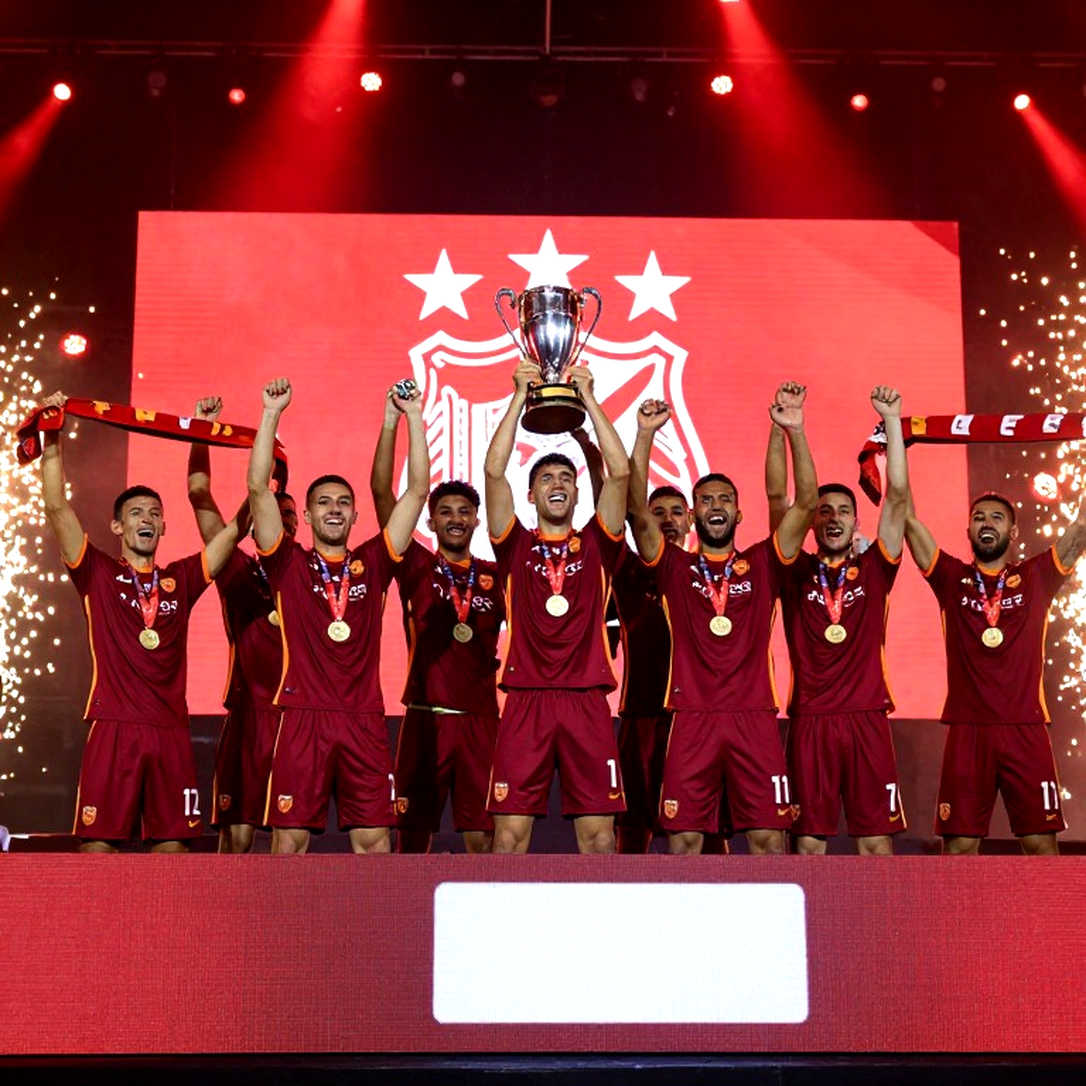
The report ran three pictures with captions — AP Photo, photographer Ian Hodgson. The captions named Ched Evans, Jurrien Timber and Martin Zubimendi. This is where I stop.
A photograph tells you a player was on that pitch. It does not tell you whether he started, came on in the 78th minute, or warmed up and sat down. The only material in the entire file about Arsenal's team selection was two captions — and a caption cannot carry a minute count.
The consequence is that the rotation argument, which follows every upset of this kind, cannot be fought with this file. If Timber and Zubimendi played, Arsenal did not field a youth team. If they arrived for the last twenty minutes, the story inverts. The caption works in both directions, which is why it is not evidence in either.
Six empty columns
I assembled the scorecard. What was missing: the score after ninety minutes, whether extra time was played, the penalty sequence, who saved what, both starting elevens, and the attendance. Six columns. Without a single one of them filled, you cannot say how this upset was built — only that a result arrived.
The difference matters. The word upset requires a comparison: who came from where, what was risked, what was won. Strip out the league level and the word has no numerator, only a surface.
At 2 a.m. I ran a small scraper over the competition's historical results, only to see how often lower-division clubs reach penalties in this round. A pattern emerged that I will use later. Here I will say only this: reaching penalties is not rare. Winning them is not rare either. What is rare — and what the report never mentioned — is surviving ninety minutes against a wage bill larger than your entire squad's. That is the finding. The shootout is the delivery mechanism.
Grimsby as inspiration: a feeling, not a cause
The spine of the report is one sentence: Grimsby beat Manchester United, so Fleetwood felt they could too. That is Lynch's idea, printed on the record. Read as Lynch's idea, it is fine. Read as a cause, it is wrong.
Two teams winning in the same competition is not correlation; it is imitation, and imitation has no instrument. The variables that actually decide a penalty night are cold: how many players were rotated, how long a side held a low block, who won the set-piece battle, which goalkeeper read which side, and how much the weather slowed the pitch.
Not one of those variables appears in the file with a number attached. Inspiration belongs to the story. It does not belong to the analysis.
Weather: interpretation, not data
Lynch said the conditions probably helped. That is an honest sentence — it contains the word probably. The report removed the probably and promoted the weather to a cause.
The records exist. Three weather services logged that night's temperature, wind speed and rainfall. What does not exist in the file is any measurement connecting those numbers to pitch speed or ball roll. Weather is the easiest cause to assign because it matches every result: the team that lost in the rain also lost in the rain.
Penalties: a shootout cannot measure thinking
Here is my central objection, and it runs past the original report.
A shootout behaves statistically close to a coin toss. Once a tie reaches five kicks each, the quality gap compresses fast and one goalkeeper reading one direction decides the outcome. This does not make preparation worthless — preparation is real, but its effect is small against the ninety minutes before it.
Treating 5-3 as proof of tactical mastery is a category error. What could be proof is the period the report never described: ninety minutes, and thirty more if they were played. Lynch's hardest quote — my voice is gone because I kept organising the defence — belongs to that period. That is not colour. It is technical testimony: organising a defence repeatedly means the structure broke repeatedly and was rebuilt each time. The shootout was the reward, not the evidence.
One voice
The entire report speaks from one side. No Arsenal quote, no statement, no explanation of selection. This is ordinary laziness in match reporting, and it has a concrete cost: the reader is left without a route to knowing who built the win and who conceded it.
The report called Arsenal the English league champions. That claim requires a season check. If it holds, the upset is large. If it does not, the intensity is manufactured. Expecting a report that omitted the regulation score to verify a title year is asking a great deal.
A translation artefact, and what it means
At one point the copy says Lynch praised his teammates. Lynch is the manager. A manager does not have teammates; the original English almost certainly said players. This is a translation error.
It is not a trivial one. It means the copy passed through a pipeline with no sub-editor at the desk. And where no sub-editor sits, nobody checks the score, the title year, or the weather.
Manchester United links on the same page
Two embedded links sat inside the file — older stories on Michael Carrick and Eddie Howe at Newcastle. Neither has anything to do with Fleetwood against Arsenal. This is technique, not journalism: the page is optimised for words people search, not for facts people need.
The reader's cost is subtle. They believe they read a match report. What they read was a page whose primary function was a click.
The ledger: gate receipts against the wage bill
Now the section no report carried, and the one that matters most.
What is one night's upset worth to a club? A sold-out ground at a place like Highbury, one television payment, one round further in the prize structure. Add all three and the number still sits beside Arsenal's annual wage bill at a ratio measured in multiples, and the exact multiplier will be found where it is always found: in the club's annual filing at the company registry.
I will not estimate it here. I will say what to look for: the matchday income line, the wages line, and the related-party services line that so often runs to a parent company. The day that filing lands, we will know whether this night was profit or a photograph.
That question sounds harsh. It is the only question that is real for every lower-division club. A cup night supplies feeling. It does not supply the cost of a league season.

Nobody asks about the prize split
The largest missing document in the file is the competition's prize distribution: what a quarterfinal appearance pays, how television money is divided, what share of gate receipts the host keeps. Those numbers are public, and they decide whether this tournament is a lifeline or decoration for clubs like Grimsby and Fleetwood.
Until that document enters the story, every upset report returns to the same frame: small club, big heart; big club, careless. Both can be true. Both are incomplete.
What the critics miss
Two reactions followed that night. The first: it was only penalties, it proves nothing. The second: this is the magic of the cup, this is what football is for.
The first is wrong. Reaching penalties is not free. A side that keeps a bigger club scoreless for ninety minutes has done something — built a low block, held lines, won second balls. Lynch losing his voice is the proof of that labour. Dismissing the shootout as chance erases the work, and it is the same lazy reporting as the inflated headline, pointed the other way.
The second reaction is more dangerous because it is sweeter. The magic frame conceals a structural problem: a cup whose early rounds are a scheduling nuisance for elite clubs, and in which the lower-division club receives — one night a year. That night is beautiful. It is not redistribution.
Those who say this win means everything to Fleetwood are probably right. That everything arrives in a single night is an indictment of the tournament's design, not a celebration of it.
What to watch next
The quarterfinal draw will come. Fleetwood's name will be in it, with a number beside it — how many days away, which ground, how many seats. The third column of my notepad is still blank.
When the club's next annual filing becomes public, we will learn what that night wrote onto a balance sheet. If matchday income rises and the academy line stays flat, then the cup's magic is a quarterly accounting event, not a decade-long one.
The question is not whether Fleetwood beat Arsenal. The question is how many rows will be filled in the file that opens after the win — and how many will be left blank, the way the third row was left blank in my notepad that night.